Choose Your Style
Different tattoo styles create different looks and suit different subjects. Here are the most common styles with simple examples
Don't worry if you don't know what style you want yet—that's totally normal! This guide will help you understand the different options. You don't need to decide right away. Just read through and see what catches your eye.
Each style has its own look and feel. There's no "right" or "wrong" choice—just what feels right for you. We've organized them into categories to make it easier to explore.
Tip: Click on any two styles to compare them side by side!
Realistic
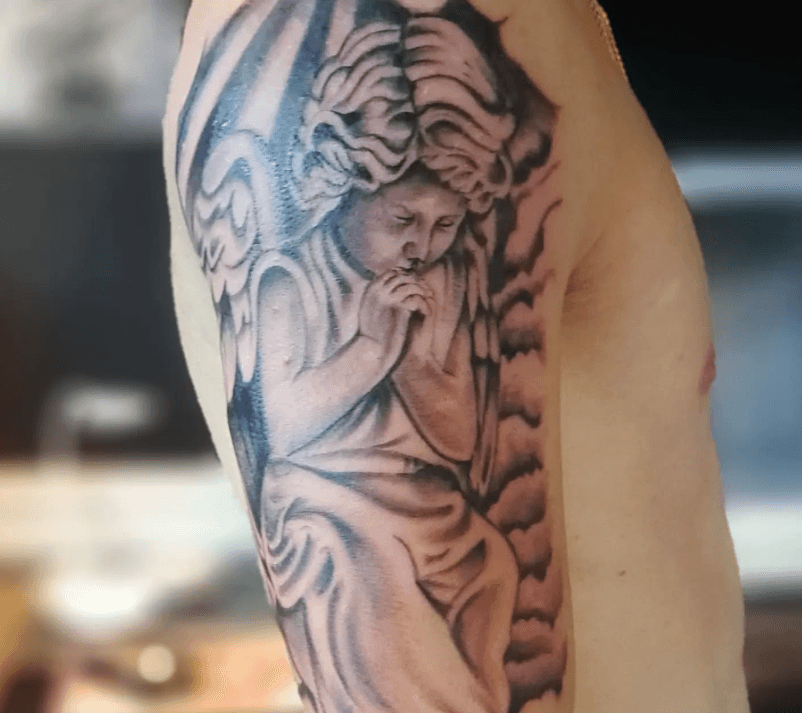
Black & Grey Realism
Overview
Photorealistic tattoos in shades of black and grey, capturing fine details and depth. Creates stunning three-dimensional effects without color.
Technical Details
medium
heavy, smooth
none
high
Click to select for comparison
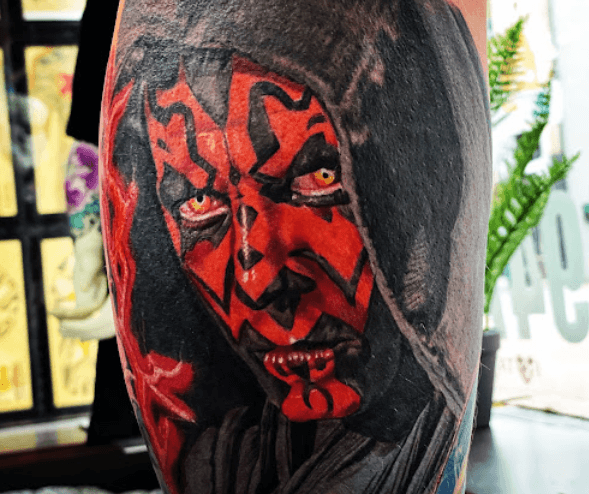
Color Realism
Overview
Vibrant, photorealistic tattoos using full color palettes to create lifelike images. Requires exceptional skill and often features portraits, animals, or nature scenes.
Technical Details
medium
heavy
full
high
Click to select for comparison
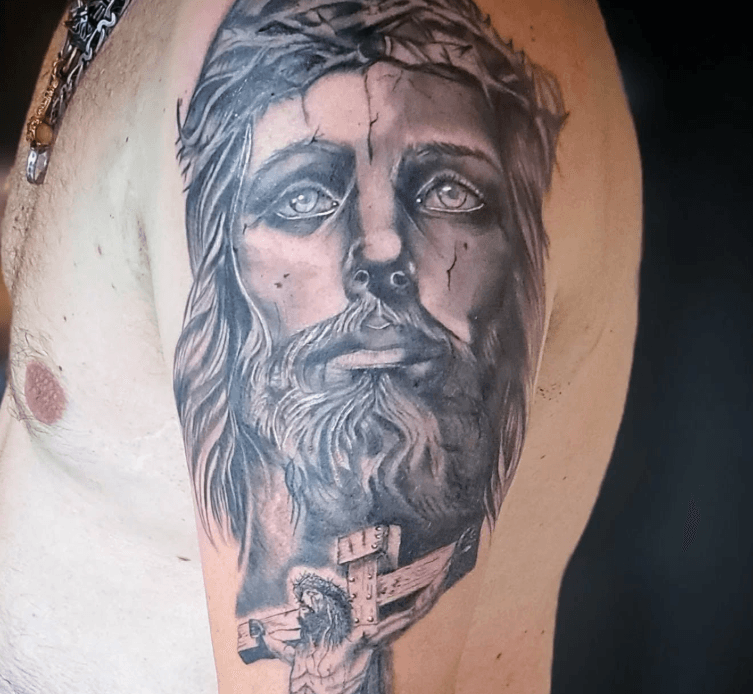
Portraits
Overview
Portrait tattoos rely almost entirely on precision shading, not outlines. The linework stays minimal because realism comes from soft gradients, contrast, and capturing subtle facial details. Shading must be smooth and layered to form depth. Artists may work in black/grey for dramatic realism or use full color to mimic skin tones and lighting. Portraits are one of the highest complexity styles because proportions, anatomy, and shadows must match the reference exactly.
Technical Details
thin to medium
heavy, smooth
black/grey or full
high
Click to select for comparison
Traditional & Cultural
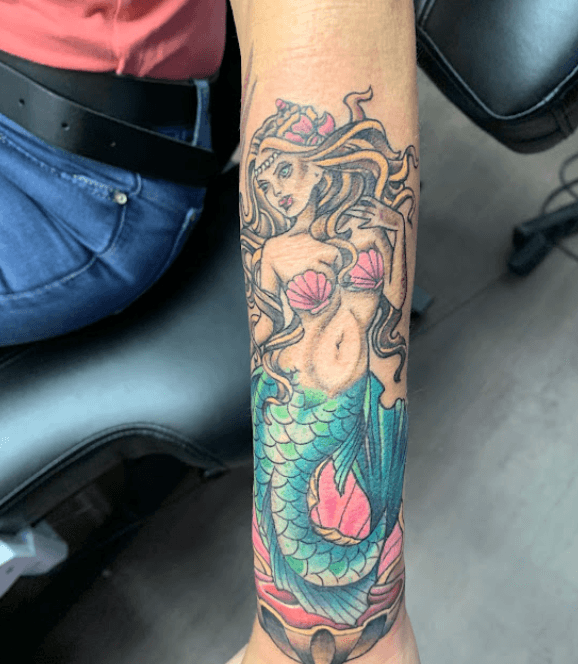
American Traditional
Overview
Bold outlines, limited color palette (red, yellow, blue, green), and classic designs like anchors, roses, and eagles. Timeless and iconic style that ages beautifully.
Technical Details
thick
minimal
limited (classic palette)
low
Click to select for comparison
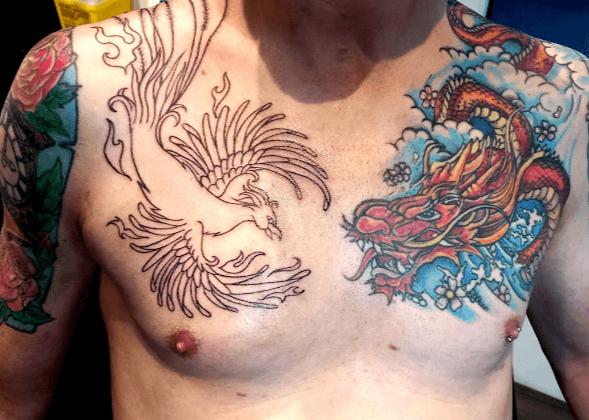
Japanese (Irezumi)
Overview
Traditional Japanese art with dragons, koi fish, cherry blossoms, and flowing compositions. Rich colors, bold outlines, and deep symbolic meanings.
Technical Details
thick
soft
full (traditional palettes)
high
Click to select for comparison
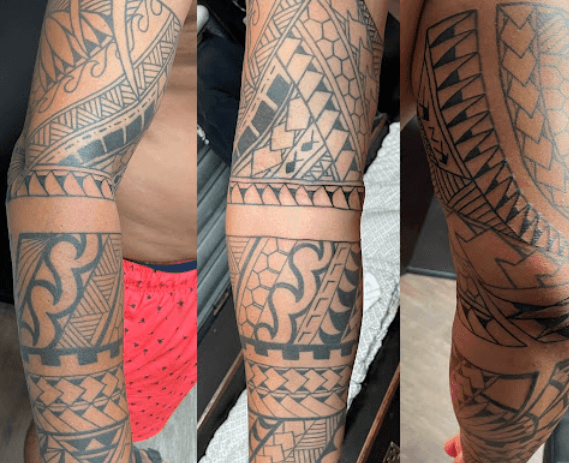
Tribal / Polynesian
Overview
Bold black patterns inspired by indigenous cultures, often geometric and flowing. Important to understand cultural significance and origins.
Technical Details
thick
none
none
medium–high
Click to select for comparison
Linework & Minimal
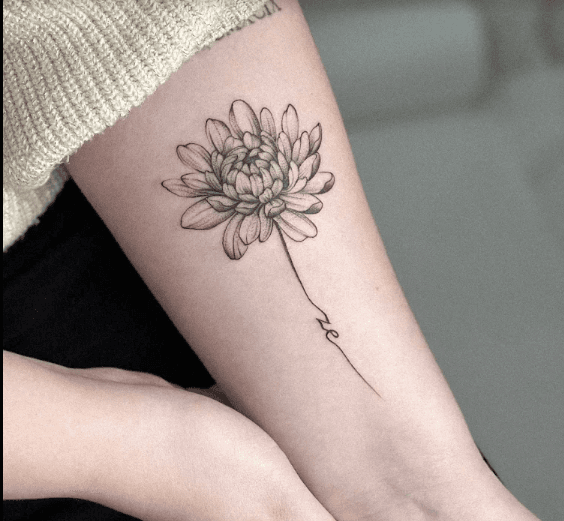
Fine Line
Overview
Delicate, thin lines creating intricate designs with minimal shading. Perfect for botanical designs, script, or detailed patterns. Elegant and subtle.
Technical Details
thin
minimal
none
medium
Click to select for comparison
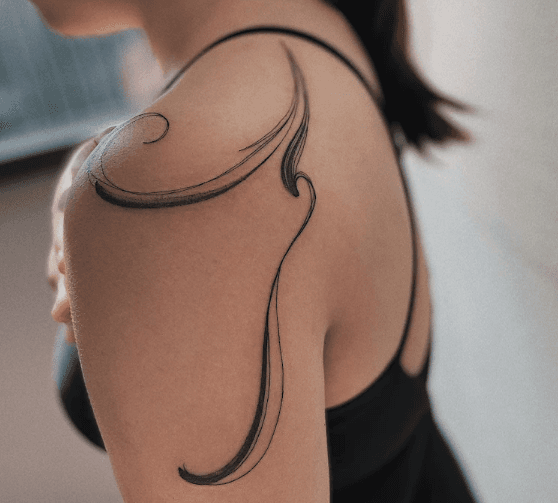
Minimalist
Overview
Simple, clean designs with minimal elements - perfect for first tattoos. Small symbols, single words, or tiny geometric shapes. Understated and timeless.
Technical Details
thin
none
none
low
Click to select for comparison
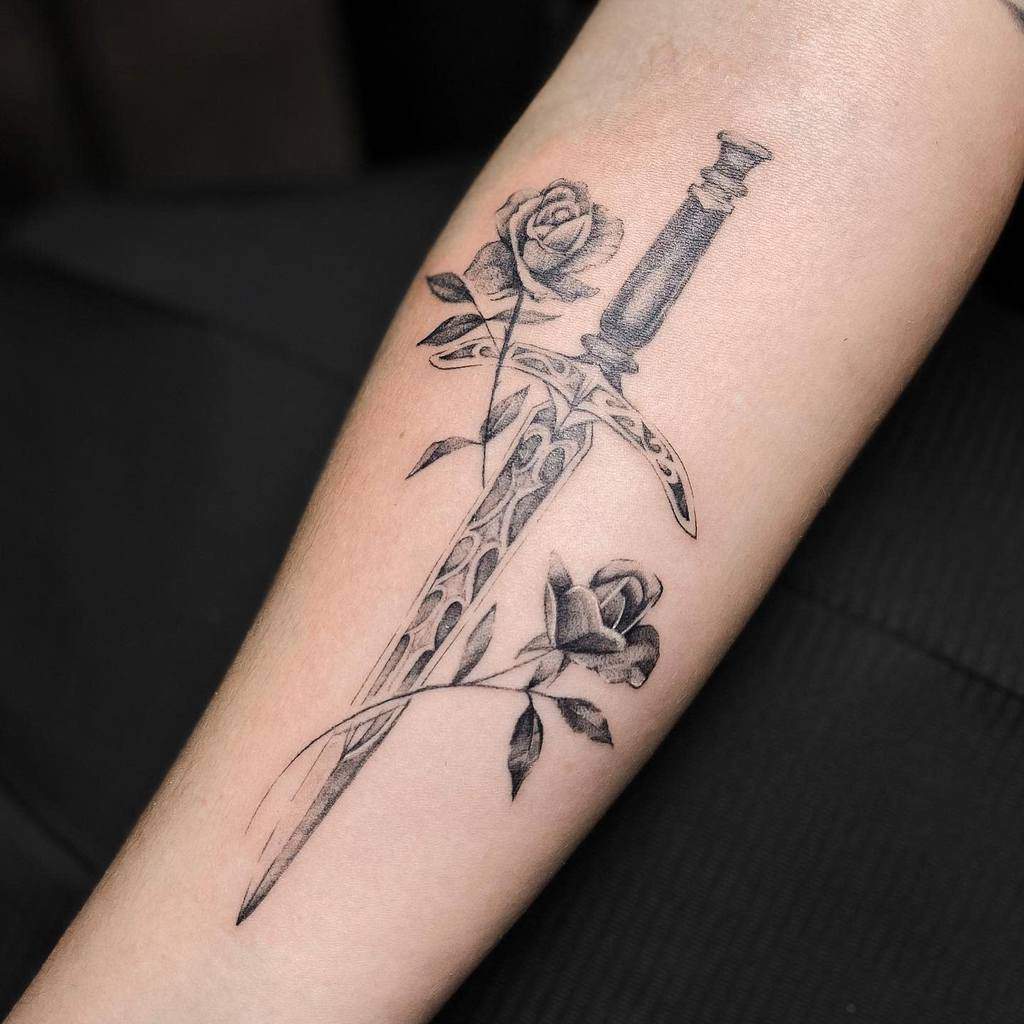
Single Needle
Overview
Single-needle work uses the finest possible needle grouping, producing hair-thin lines and extremely delicate detail. Shading is almost nonexistent, limited to tiny areas of micro-shading. Because the lines are so fine, color is rarely used: it fades faster and loses clarity. The designs themselves look simple, but the technical difficulty is high — keeping ultra-thin lines consistent requires expert control.
Technical Details
ultra-thin
minimal
none
medium–high
Click to select for comparison
Artistic & Abstract
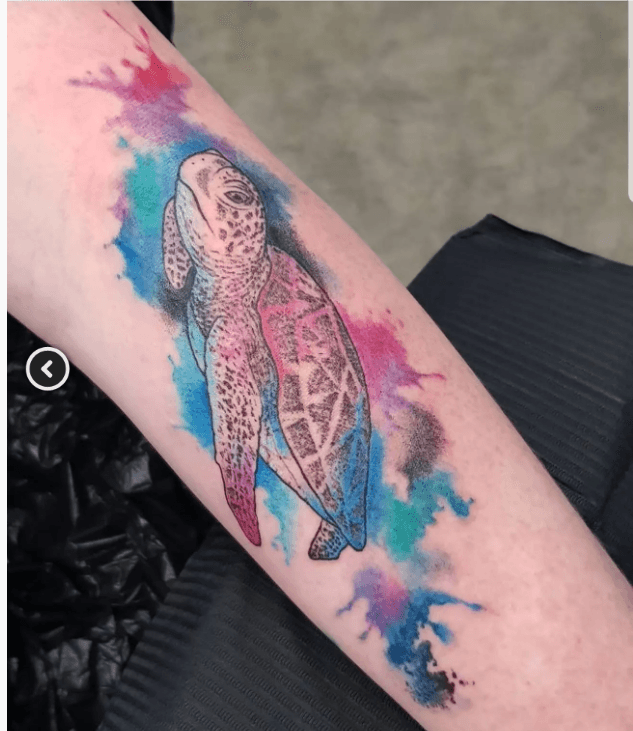
Watercolor
Overview
Soft, flowing colors that mimic watercolor paintings with blended edges. No black outlines, creating a painterly, artistic effect. Vibrant and unique.
Technical Details
minimal
soft and flowing
full
high
Click to select for comparison
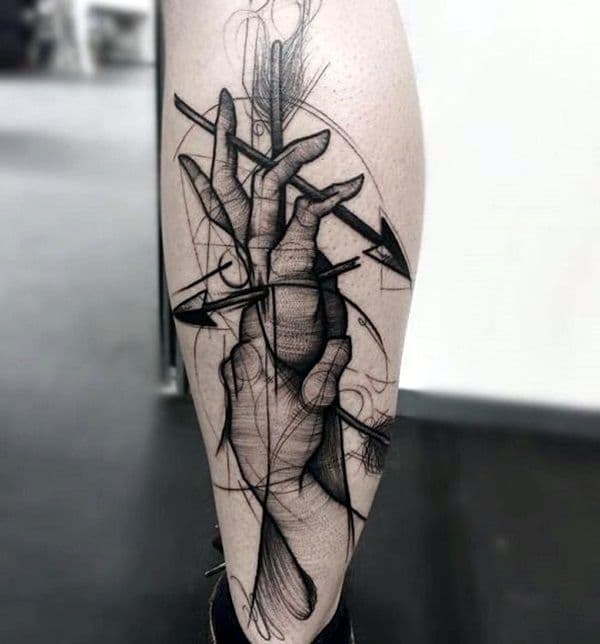
Abstract / Sketch
Overview
Artistic, unfinished-looking designs that appear hand-drawn or sketched. Creative and expressive, often with visible "sketch" lines and artistic flair.
Technical Details
loose, textured
minimal
limited
medium
Click to select for comparison
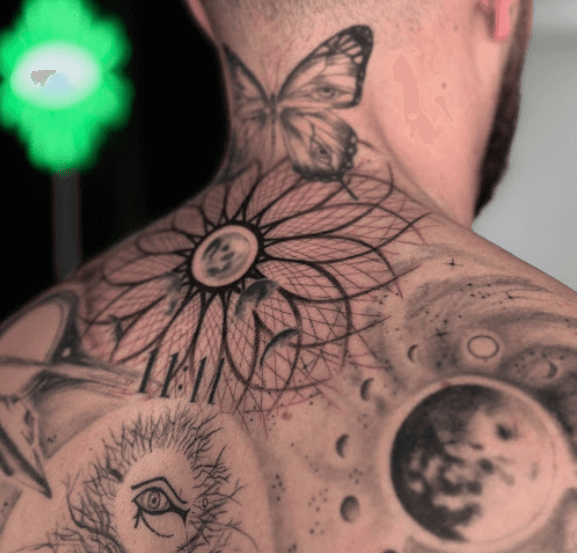
Geometric / Dotwork
Overview
Precise geometric patterns, mandalas, and dotwork creating intricate designs. Includes sacred geometry, mandalas, and precise linework. Meditative and detailed.
Technical Details
thin or medium
minimal
none or limited
medium
Click to select for comparison
Modern Illustrative
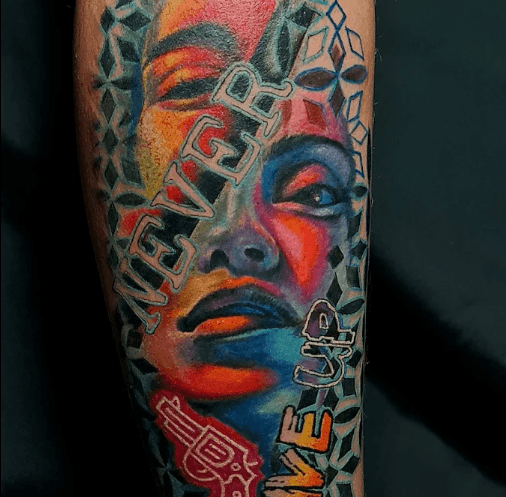
Neo-Traditional
Overview
Modern take on traditional tattoos with more colors, depth, and detail while maintaining bold outlines and classic subject matter. Best of both worlds.
Technical Details
thick
soft
full
medium
Click to select for comparison
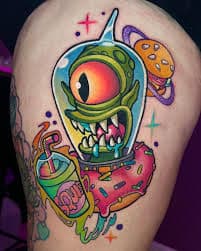
New School
Overview
New School tattoos are the wild child of modern tattooing: bold outlines, exaggerated shapes, and cartoonish proportions. Shading uses dramatic gradients and strong highlights to create volume. Colors are bright, saturated, and often hyper-stylized. Because the shapes are big and expressive, complexity is medium-high — not as precise as realism, but much more dynamic and layered than classic cartoon styles.
Technical Details
thick
bold, high-contrast
full, saturated
medium–high
Click to select for comparison
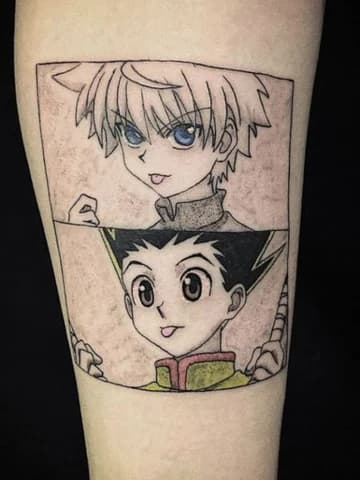
Cartoon / Anime
Overview
Cartoon and anime styles use clean, consistent outlines and a storytelling aesthetic. Shading is "cell-shaded" — blocks of light and shadow rather than smooth realism. Colors can be flat or vibrant, depending on the reference. These tattoos focus on clarity, expression, and mood rather than depth. Complexity stays medium: shapes are clear and readable, but execution requires precise, crisp line control.
Technical Details
clean, consistent
cell-shaded
flat or vibrant
medium
Click to select for comparison
Tips for Choosing
- •For first tattoos: Consider minimalist, fine line, or American Traditional styles—they're often less painful and heal well.
- •Browse portfolios: Look at artists' work to see which styles they specialize in. Some artists excel at specific styles.
- •Compare styles: Select two styles above to see them side by side and help you decide.
- •Mix and match: You can combine elements from different styles. Talk to your artist about your ideas.
- •No rush: Take your time exploring. You don't need to decide immediately—it's okay to browse and think about it.
Nice work! You've explored different styles. Next, we'll help you figure out where on your body you might want your tattoo. Don't worry—we'll explain pain levels and what works best for first-timers.